
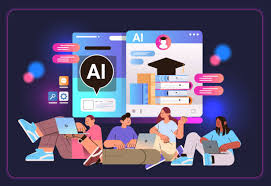
AI is and will continue to be a key resource in our lives. Whether it be in the workplace or in the classroom, the new and old generations are going to have to learn how to use it safely and responsibly. In particular, students in this generation have figured out how to use AI as a cheat for difficult assignments or an easy way out for lazy students. Knowing that using AI is an option is ruining kids’ motivation and incentive to do their work. From a teacher’s perspective, the way they run their classrooms has to adjust to this new technology.
Throughout the past decade, schools have pushed to make everything online, from tests to assignments to writing; everybody has tried their hardest to make everything online accessible. Now, in the face of AI, teachers seem to be turning back to the old ways. “We do a lot more in class writing, I have students write at home a lot less frequently and do a lot more pen and paper writing,” says a college professor at Pembroke University. Along with that, professors are saying that assignment design has changed more than the platform it’s given on. Mike Mitchell, Director of Business Development for AI for Education, says that he includes assignments that require students to evaluate and analyze responses that AI isn’t capable of easily answering, “Instead of focusing on tasks where students simply repeat information, we now emphasize thinking about thinking: analyzing, evaluating, and creating,”. It’s going to be hard to prevent AI from taking over pieces of our lives, but there are ways to work around it and work with it. Teachers have learned how to use AI to their advantage as a tool and an assistant, not a workaround for difficult tasks. “AI should act like a coach or collaborator, not a replacement. When students use AI to generate ideas, explore different perspectives, or receive feedback on drafts, they’re still practicing essential skills,” says Mitchell. In all, educators and students are learning how to not only work around AI but also use it as a tool to increase understanding and development.
Now isn’t the largest concern with AI. Some of the bigger issues come with what it is going to continue to do to future generations that rely on AI. “If schools rush to adopt AI without teaching students how to use it responsibly, we could deepen inequities, amplify biased information, or unintentionally weaken critical thinking,” says Mitchell. Without the proper education on how to use AI to your advantage, it can diminish problem solving abilities. Andrew Youdin, an astronomy professor, expands on this, “If students are taught to lean on AI for every challenge, they might become less comfortable with frustration and uncertainty. But if they learn that AI is a tool—not an answer machine—they can actually build more confidence. AI can help them break big problems into smaller steps, brainstorm possibilities, or reflect on their thinking. That supports persistence rather than weakening it. The key is teaching students when to step away from AI and trust themselves.” The effects of AI come on a large spectrum; without the appropriate usage, it can diminish analytical abilities, but if used correctly and in productive ways, it can be used as a tool for understanding and development.
AI will change our everyday lives in countless ways. ‘Robots taking over the world’ has been the plot of dozens of action movies, and fears of many, but the reality of those ‘robots’ is AI. If used correctly and skillfully, AI can be something that can contribute, not take over. There’s more to think about than declining intellect; AI is powered by large amounts of computing power, which consumes significant energy and water. Especially since it’s being used inefficiently, it can increase carbon emissions and strain local water sources. “That’s why responsible AI use isn’t just an academic issue; it’s an environmental one. Teaching students to use AI thoughtfully helps reduce waste, cost, and environmental impact,” states Mitchell.